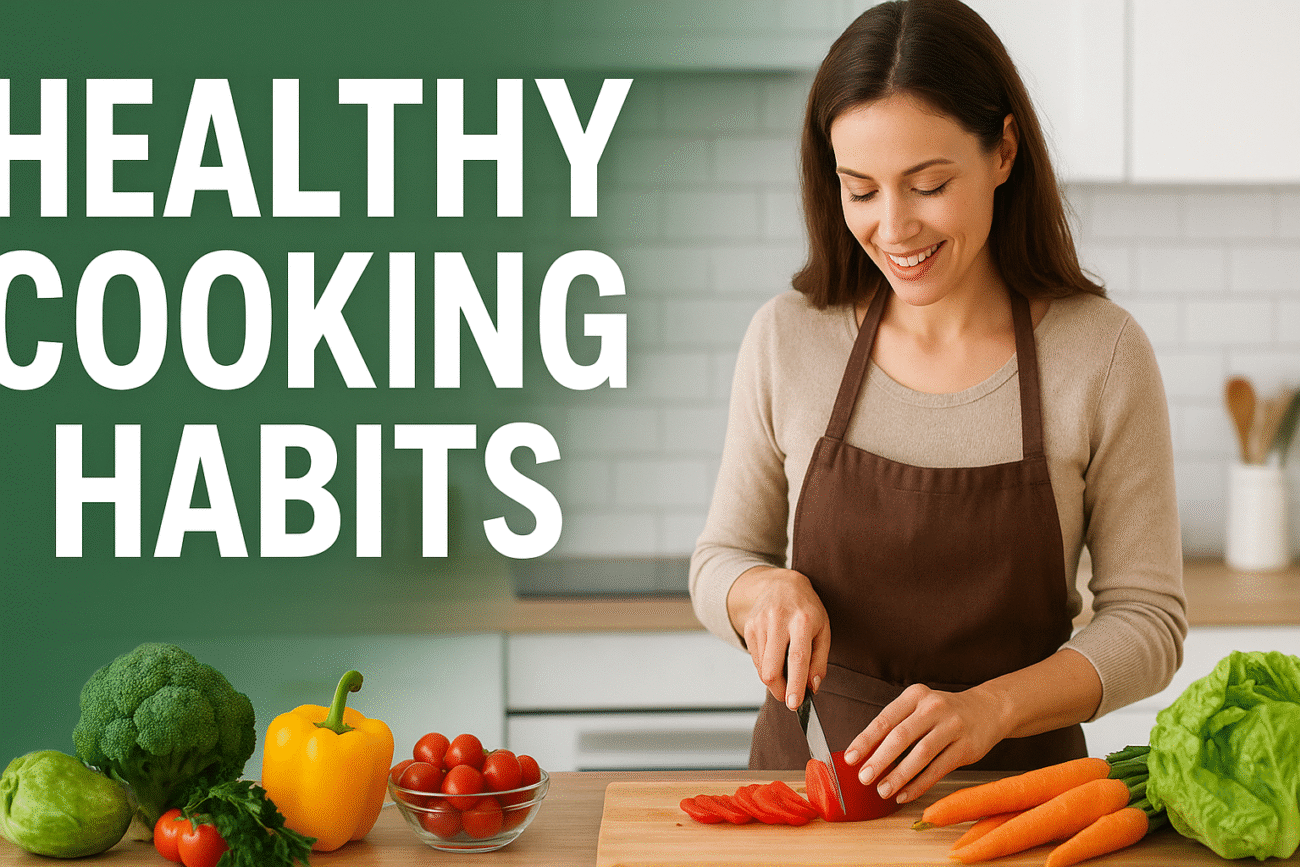
We are aware of the fact that what we consume determines the way we feel, appear, and age. In our busy modern society where there are takeout restaurants and ready-prepared food, healthy cooking is pushed to the backburner. It does not require one to be a professional cook nor spend hours in the kitchen preparing nutritious and delicious meals. Healthy cooking habits will make your diet better, give you more energy, and make your health on a meal-by-meal basis.
Today, in this post, we are going to discuss useful and sustainable practices that can help you to make healthy cooking easier and more enjoyable, no matter how little or inexperienced you are. Regardless of your health status whether you are only beginning or you want to upgrade your level of skills, these habits will guide you to make better decisions in the kitchen on a daily basis.
Reasons why healthy cooking habits are important.
By preparing food at home, you have complete authority over the ingredients of your food. You determine the amount of salt, sugar or oil to use, you avoid preservatives, additives and hidden calorie content of restaurant or packaged foods. Research in the Harvard T.H. Chan School of Public Health indicates that individuals who prepare their meals at home are more likely to consume less calories, more fruits and vegetables, and they are less likely to become obese. Eating in a healthy manner also makes you save money, less food waste, and enjoy your relationship with food. It takes time and little, repeated changes before creating these habits which later become second nature.
Plan Your Meals Ahead
Planning your meal is one of the easiest methods of staying on track of healthy eating. Planning meals will make you organized, shop efficiently and avoid temptations of last minute takeouts. Choose one day a week to plan your meals maybe Sunday. Eat a combination of vegetables, whole grains, and proteins as well as snacks. Ahead planning helps you to weigh indulgences with lighter foods and balance a realistic diet and one that is pleasant.
Benefits of Meal Planning
– Minimizes decision fatigue ( What should I eat to-night?).
– Eliminates impolite, unhealthy eating decisions.
– Saves money and time
– Assists in controlling portions and proper diet.
When it comes to planning a whole week, it can be so overwhelming to plan only two or three dinners. When you have got it on, grow slowly.
Keep a Well‑Stocked Pantry
Cooking It is so easy when one has the right staples in the kitchen. Being a prepared person will allow you to make delicious, healthy meals without having to order.
Critical Healthy Pantry Products:
Whole grains Brown rice, whole-grain pasta, quinoa, oats.
• Legumes: chickpeas, lentils, black beans.
Occasionally, healthy fats include olive oil, avocado oil, nuts, and seeds.
Herbs and spices Cumin, turmeric, basil, cinnamon, garli.
• Canned food stuffs: tuna, beans, low sodium tomatoes.
• Frozen fruits and vegetables: good as smoothies and stir-fries.
A fully stocked pantry gets rid of the excuses and ensures healthy eating at any time.
Select Complete, Unmodified Ingredients.
The straightforwardness prevails in healthy cooking. The more natural a food is, the better it is to the body. Fresh vegetables, fruits, whole grains, lean proteins, and healthy fats should be used. Excessively processed food with a lot of sugar content, sodium and unhealthy oils should be avoided. Check labels; when you cannot even say a half of the ingredients, it is probably not the best choice.
Shopping Rockets: Fresh produce, dairy, and meats are in the outer aisles. The middle aisles are usually occupied with processed foods and sweet products.
Practice Portion Control
Even the healthy food will cause weight gain when you consume excessively. The rule of thumb is to plate your food in the following manner; 1/2 vegetables or salad 1/4 lean protein and 1/4 whole grains. Smaller dishes and bowls make your brain think that you are being satisfied with less. Watch the signs of hunger and do not eat because you are bored or used to it.
Cook with Healthy Fats
Not all fats are the same. Replacing the unhealthy fats with the healthy ones can help reverse the process of heart diseases and inflammation.
Healthy Fats to Use:
– Olive oil
– Avocado oil
– Coconut oil (in moderation)
– Nuts and seeds
– Salmon and sardines
Fish Oily fish such as sardines and salmon.
Do not consume trans fats, and should avoid oils that are refined like corn oil or soybean oil. Frying can be replaced with air frying, baking, roasting or grilling. These technologies consume less oil yet they provide a lot of flavor.
Learn How to Master Healthier Cooking Techniques.
You are able to retain your favorite dishes and cook them in a different manner. More healthy ways keep nutrients and minimize unwarranted fats and calories.
Healthy Cooking Methods:
– Steaming: preserves the vegetables in a fresh state and nutrients.
– Grilling: does not provide any additional fat.
-Roasting: it extracts natural sweetness in vegetables.
-Sautéeing: replace butter with olive oil or broth.
– Air frying: crispy using little oil.
-Boiling or poaching: works great with eggs, chicken and fish.
Test to determine the techniques you like the most. Healthy food is also delicious as you will find out.
Cut Down on Salt and Sugar
Excessive salt and sugar are the causes of high blood pressure, heart disease, and diabetes. Reducing does not imply a reduction in flavor.
How to Reduce Salt:
– Herbs, spices, citrus juice, and garlic make a good taste.
– Select canned foods and sauces that have low sodium contents.
Taste then, and add more salt.
How to Reduce Sugar:
– Substitute water with a sugary beverage with water, herbal tea or infused water.
– Add honey or a little bit of honey or sweeten with fruit.
– Replace baking ingredients with things such as mashed bananas or unsweetened applesauce.
Your palate will start to change and you will start to prefer natural flavors.
Increase the Fruits and Vegetables.
A healthy diet is based on vegetables and fruits, which are high in vitamins, minerals, and fiber that can be used to aid the process of digestion, immunity, and heart health.
Easy Ways to Eat More Veggies:
– Add spinach to smoothies or kale.
– Put a salad to the lunch or dinner.
– Roast vegetables tray once a week to have fast sides.
– Eat vegetable soups or stir-fries.
– Replace pasta with zucchini noodles or spaghetti squash.
One should strive to have a variety of colors on his or her plate, with more colorful food, the broader a spectrum of nutrients.
Make Healthy Swaps
The idea of healthy cooking does not include restriction, but rather more intelligent substitutes that will pay off in the long run.
Simple Swap Ideas:
– White rice White rice is replaced with brown rice or quinoa.
– Sour cream → Greek yogurt
– Butter → Olive oil or avocado
What was once a white bread is now whole-grain bread.
– Whole wheat or chickpea pasta has replaced regular pasta.
– Soda → With slices of fruit Soda sparkling water.
Minor variations are used to preserve flavours and texture and enhance nutrition.
Cook in Batches and Meal Prep
Meal planning is an effective habit of being on track. Cooked healthy food is prepared and ready, and therefore about to miss the unhealthy food when you are hurried. Find some time once or twice a week to cook in bulk. Get ready grains, proteins and roasted vegetables which can be combined and swapped during the week. Put store meals in transparent containers to be able to see what is available. You will save time, money and stress, your future self will appreciate you.
Stay Hydrated While You Cook
Water facilitates metabolism and digestion. Always have a bottle of water in the kitchen with you during your cooking activities. Frequently, one thinks he or she is hungry when it is really thirst. Glass of water before every meal will make you eat small portions and maintain your energy levels.
Food Test: Spices and Herbs.
Spices and herbs are nutritious and tasty. They are healthy and also add flavor.
Examples:
– Turmeric: pain reliever.
– Garlic: improves immunity and heart condition.
– Cinnamon: is useful in controlling blood sugar.
– Basil, rosemary, thyme: makes it fresh and no calories.
Blend the taste to make foods interesting. When your food is seasoned, you will find that you will require less salt or sugar.
Meditate: Cooking and Eating.
Preparing a meal is not always a burden but can be a stress relieving exercise. Note down the smell, color and feel of your ingredients. This makes you value your food and be conscious with your choices. When eating, slow down. Take your time and eat every bite. Being mindful to eat helps to digest better, not to eat too much, and helps you enjoy the aspect of food again.
Restrict Fried Foods and Processed Meats.
Fried foods and processed meats contain a lot of sodium and bad fats that cause inflammation and cardiac issues. Select low fat foods like chicken, fish, eggs, tofu, beans and lentils. You can use air-fried or baked versions if you are in the mood to have something crispy.
Educate on labels of foods.
Knowledge is power and knowing what is in your food is power. Checks labels of readings fast and then purchases packed goods. Focus on:
– Serving size
– Calories per serving
– Added sugars
– Sodium content
– Types of fat (avoid trans fats)
Do not use products that contain long lists of ingredients containing additives or preservatives. The fewer the items on the list the better.
Engaging Family in cooking.
It is easier to live healthy when all people are involved. Engage family members/ friends in the preparation of meals. Children who participate in food preparation have higher chances of consuming fruits and vegetables and have healthy lifelong habits. Give menial chores such as washing vegetables, mixing up sauces or laying the table. It is enjoyable and challenging to cook together.
Eat Out Portion size When eating out.
It is okay to be out and eat occasionally, however, the restaurant portions are usually excessive. Share food, do not eat sugary beverages, and do not eat fried snacks. Select grilled, baked or steamed foods as opposed to fried or creamy foods. There is no need to rush and be done with it, left overs are ok.
Use Smart Kitchen Tools
The contemporary devices simplify the process of cooking healthy meals. Air fryers, blenders, food processors, and slow cookers make meal preparation short and easy.
Examples:
– Crispy oil-minimal air fryer.
– Smoothie blender with fruits, greens and protein.
– Slower cooker of soups and stews.
Invest in instruments that you are passionate about- they will make you be persistent with your objectives.
Dont Fear Carbs – Pick the Right Ones.
Carbs are needed to provide energy. The trick lies in the selection of complex carbs in place of refined carbs.
Opt for:
– Whole grains
– Sweet potatoes
– Oats
– Brown rice
– Quinoa
These are low carb foods that take time to digest leaving you satisfied and your blood sugar balanced.
Make It Enjoyable
Eating well should not be an obligation. Listening to music, using new recipes and making cooking a creative outburst. The more you like doing it the more regular you will be. You need not be good–improvement is better than restraint. A moderated attitude that lets one indulge occasionally is a better way to live than a mind that goes all or nothing.
The Bottom Line
Learning to cook in a healthy manner is one of the best investments that can be made in the long run in terms of health. Dieting and deprivation are not the issues; it is about making a lifestyle that is body and mind fueling. Begin small- schedule meals, cook on a regular basis, experiment and be mindful. Habits become a habit and over time, the better the energy, the digestion, the immunity, and the happier one would be with food. Keep in mind: it is all about consistency, balance and pleasure in the process healthy cooking.
